The principle
Wavelength determines depth. Shorter wavelengths, at the blue end, stay nearer the surface. Longer wavelengths, at the red and near-infrared end, travel further into the skin. That single fact explains why blue is the acne colour and red is the skin rejuvenation one.
The colours
Blue
Used to treat acne. Sits closest to the surface, where acne-causing bacteria live.
Red
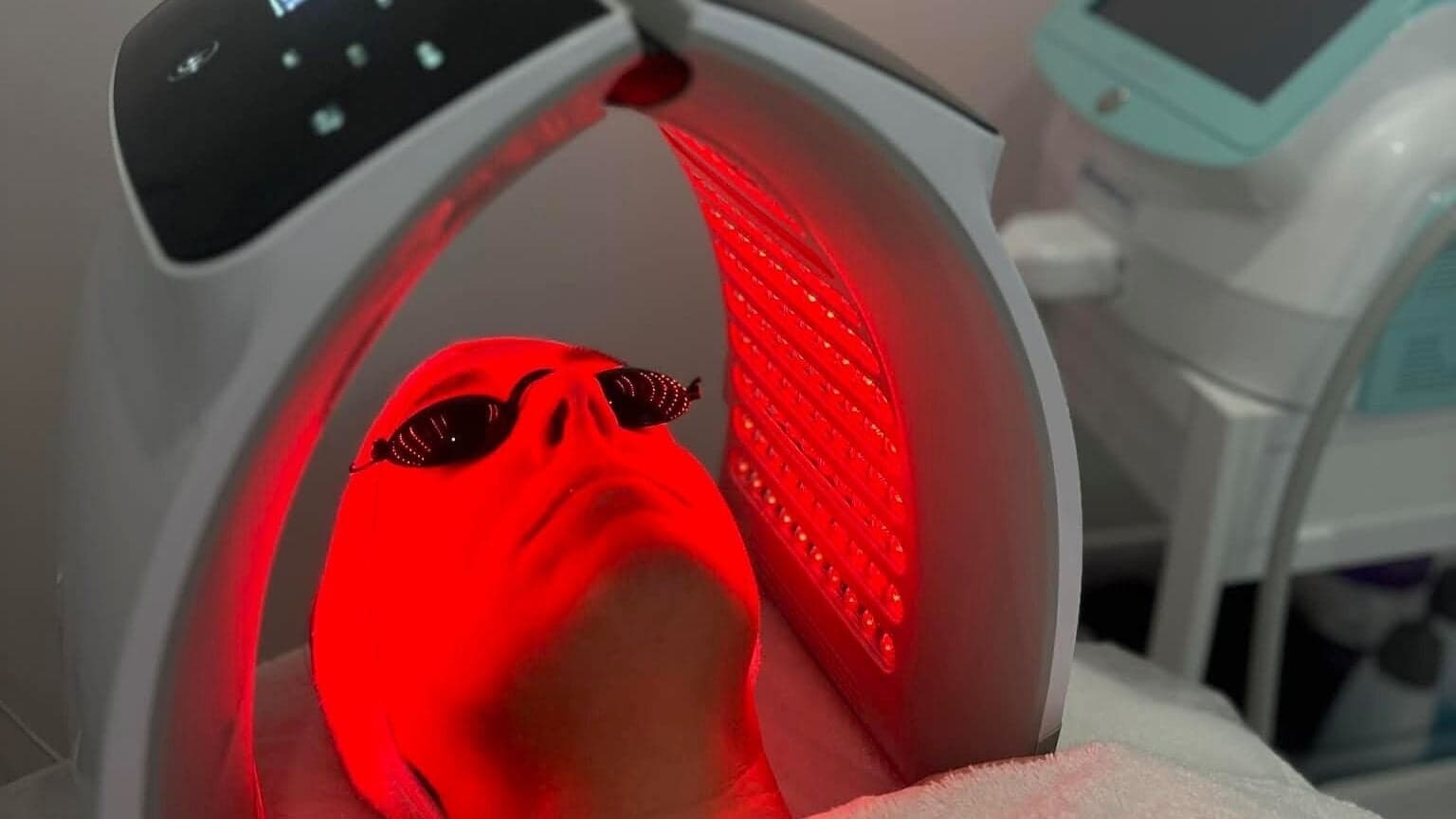
Used for skin rejuvenation. Reaches the deeper layers where collagen sits, supporting repair processes and the appearance of fine lines.
Near-infrared
Invisible to the eye and the deepest-reaching of the wavelengths. Generally paired with red rather than used alone.
Yellow and amber
Commonly selected for redness, sensitivity and general comfort in reactive skin.
Green
Typically used where tone and pigment are the concern.
Cyan, purple and white
Each carries its own skincare benefits. Purple is often used as a combination of red and blue, and white is used where a broader coverage is preferred.
Which one you actually need
The honest answer is that this is a judgement made on your skin, on the day, by the person treating it. A chart tells you what the colours are for. It doesn’t tell you what your skin needs, and choosing a colour from an article isn’t a substitute for having someone look at your face.
At e-skin your therapist selects the wavelength based on what we’re treating in that appointment, which is often not the colour clients expected before they arrived.
Common questions
Which LED colour is best for acne?
Blue. Blue light frequencies are typically used to treat acne.
Which LED colour is best for wrinkles?
Red, often combined with near-infrared. Red light is used for skin rejuvenation and the appearance of fine lines.
Can more than one colour be used in a session?
Yes, and it’s common. Your therapist selects based on what’s being treated.