
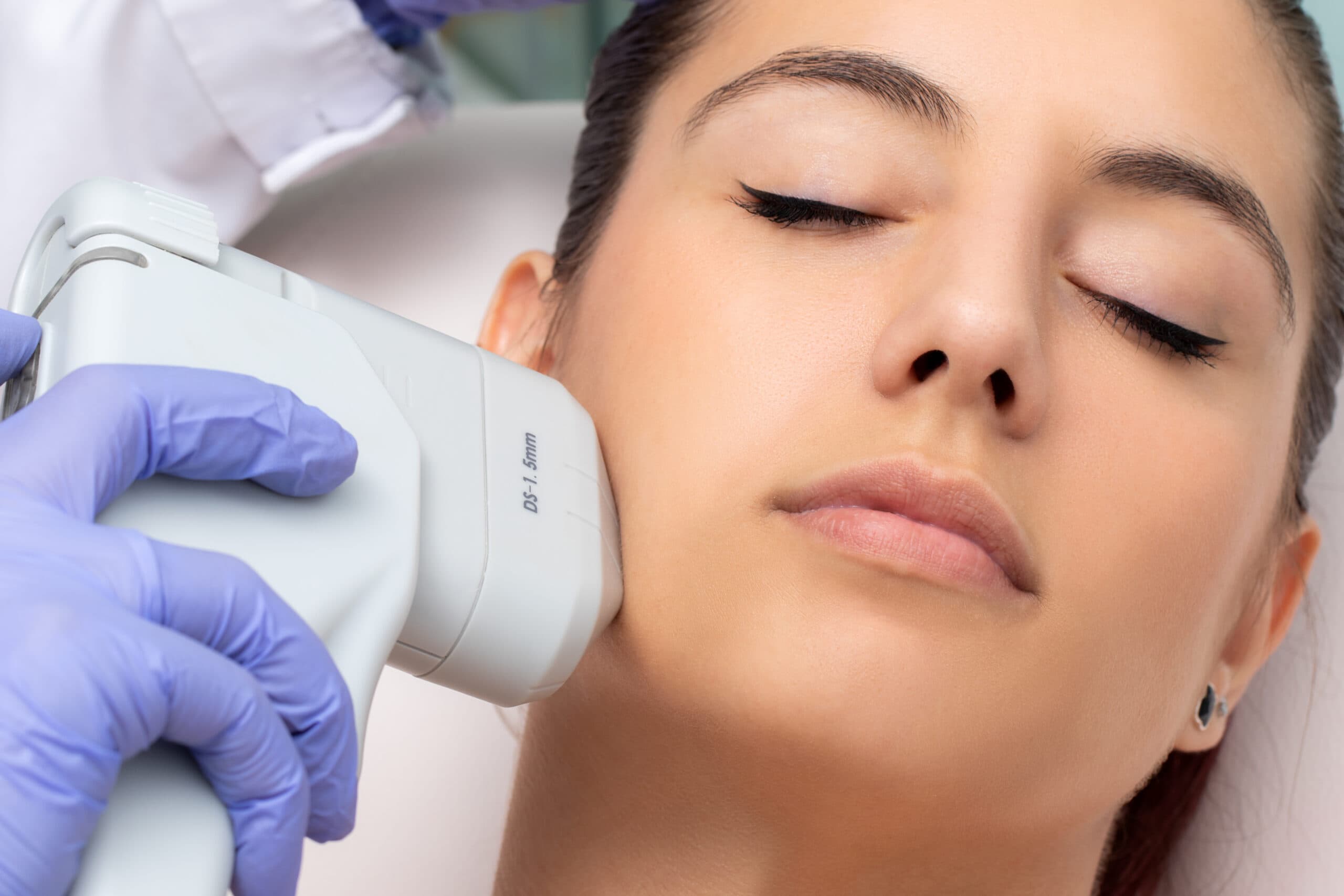
Why HIFU photos are harder to judge than most
With most cosmetic treatments the change is either immediate or it’s not there at all. HIFU is different. It works by triggering your own collagen production, so the visible change arrives gradually over 2 to 3 months as your body lays down new collagen. A photo taken the week after treatment shows almost nothing. A photo taken at 3 months shows the actual result.
That gap is the single biggest reason people misread HIFU before and afters. If a clinic shows you a dramatic change captured a few days post-treatment, you’re looking at swelling, lighting or angle, not collagen.
The honest timeline
Days 1 to 7
Some people see a slight tightening straight away. This is a short-term tissue response rather than the real result. Skin may look flushed at first, and some clients notice slight swelling, tingling or tenderness. This settles within hours to a few days.
Weeks 2 to 6
This is the quiet phase, and the one where people worry it has not worked. Collagen remodelling is underway but the change isn’t yet visible enough to photograph reliably. Judging your result here is premature.
Months 2 to 3
The ultimate results take place over 2 to 3 months as your body naturally regenerates collagen. This is the honest comparison point, and any clinic serious about its own results photographs here.
Beyond 3 months
Because the treatment stimulates your own collagen production, how long the results last really depends on you. The treatment produces new collagen on the inside, but your natural ageing process dictates how long that translates into visible results on the outside.
What changes, by area
Jawline and lower face
The most commonly photographed area, and usually the most legible. What improves is definition along the jaw and a reduction in the softness that forms above and below it. The change reads best from a three-quarter angle, which is exactly why an honest clinic shoots that angle both times.
Neck and under the chin
Loose skin on the neck and sagging under the chin are among the concerns HIFU is designed for. Neck results tend to arrive slightly later than face results and are strongly affected by head position in the photo. A chin lifted 10 degrees will flatter any neck.
Eyes and brow
HIFU is used to gently lift skin on the eyebrow. The change here is subtle by nature: a small amount of brow lift changes how open the eye looks, which is often more noticeable to the person than to a camera.
Décolletage
Used to smooth lines and wrinkles on the chest. This area shows sun damage and crepiness more than laxity, so the improvement reads as texture rather than lift.
How to read a before and after photo properly
5 things make a comparison genuine. Apply them to any clinic, including ours:
- Same lighting. A softer light on the after shot erases texture on its own.
- Same angle and head position. Lift the chin and the neck improves without any treatment.
- Same expression. A relaxed jaw and a slightly clenched one are different faces.
- No make-up in either shot, or the same make-up in both.
- A stated time gap. "Before and after" with no interval isn’t a claim you can check.
A set that meets all 5 is evidence you can weigh. Judge a clinic on those, and on what its clients say about the visit.
How many treatments the photos represent
Most clients only need a few treatments, spread out 2 to 3 months apart. Some results circulating online are single-session; others are the end of a course. Those are very different claims, so it’s worth asking which one you’re being shown.
What HIFU is for
HIFU treats the deep foundational layer addressed in cosmetic surgery and is considered a great alternative to surgery, especially for those not ready for it. But it’s a lifting and tightening treatment, not a substitute for a surgical facelift where there’s significant excess skin.
A good HIFU candidate has mild to moderate skin laxity, where the skin begins to feel and look less firm. Your consultation is where we confirm that, and where we point you to the treatment that fits if something else suits you better.
Our own results
Our clinic has performed over 11,000 HIFU treatments on the TGA approved HIPRO V at our Southport clinic. We’re currently rebuilding our results gallery to the standard set out above: matched lighting and angle, stated intervals, stated number of sessions, and written client consent. We would rather publish a smaller honest gallery than a large flattering one.
Common questions
How long until I see HIFU results?
You may see some initial effect, but the ultimate results take place over 2 to 3 months as your body naturally regenerates collagen.
Will I see a difference after 1 treatment?
Many clients do, but the change is gradual rather than immediate. Most clients only need a few treatments, spread out 2 to 3 months apart, and the result is assessed at the 2 to 3 month mark rather than straight away.
How long do HIFU results last?
Since the procedure stimulates your own collagen production, how long the results last really depends on you. Your natural ageing process dictates how long the new collagen translates into visible results.